CompactLogix 1769 System Reference: CPUs, I/O, Power Supplies, Batteries, and Spares
Sep 07, 2026
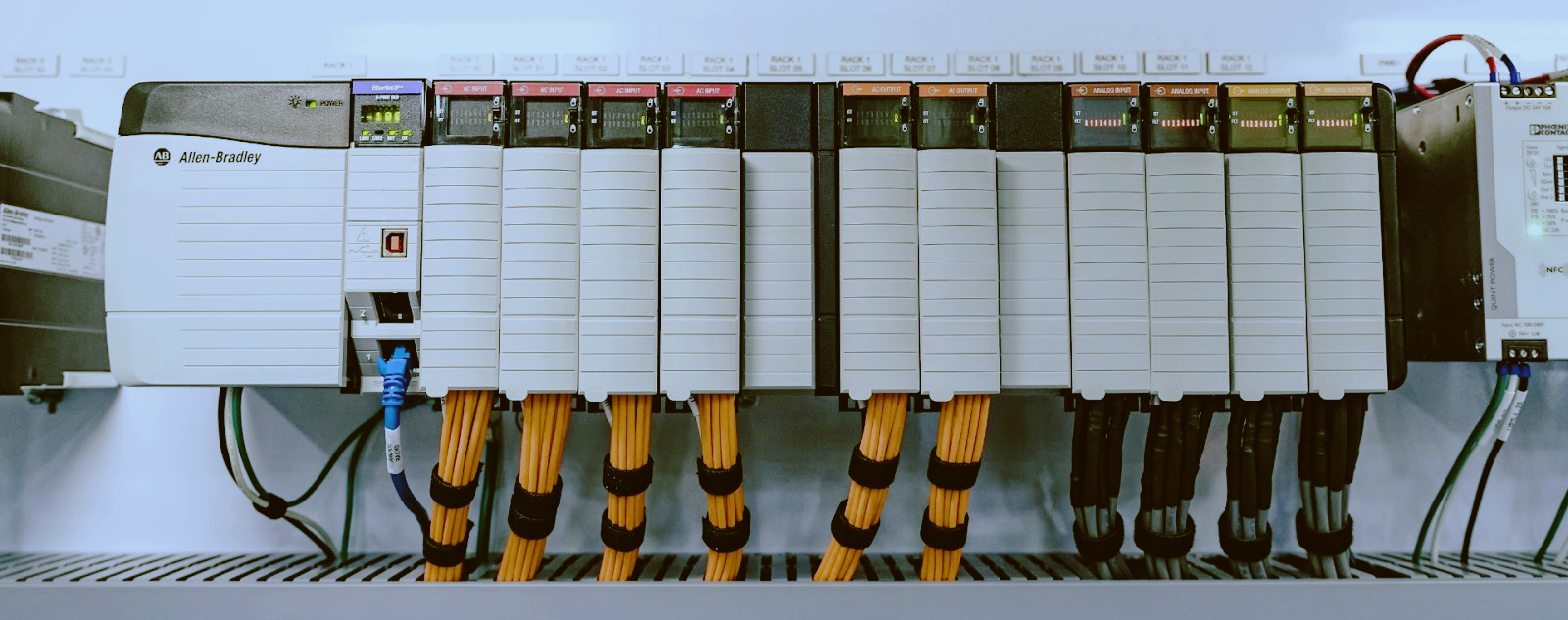
The CompactLogix 1769 platform is Rockwell Automation's modular compact controller family. A 1769 system has a controller, 1769 I/O modules, and a 1769 system power supply mounted on one backplane. Two controller generations use this platform: the CompactLogix 5370 family (current) and the older 1769-L3x/L4x generation. Both generations use the same 1769 I/O modules, power supplies, and end caps. This reference covers controllers, I/O, power, battery, cabling, and the spare parts worth stocking in 2026.
Platform overview
The 1769 platform is a field-proven design. Key facts:
· The controller mounts at the left end of the chassis.
· I/O modules mount to the right of the controller on the same backplane.
· A 1769-ECR right end cap terminates every chassis.
· A 1769-ECL left end cap terminates the left side of I/O-only expansion chassis.
· The system power supply feeds the backplane.
· Programming uses RSLogix 5000 or Studio 5000.
· The platform is mature, and Rockwell still sells it in 2026.
1769 hardware is common in machine control, packaging, and skid applications worldwide. Buyers in the Middle East, the Americas, and Europe run this platform. Spares are widely available.
Controllers: CompactLogix 5370 family
The 5370 family is the current 1769 controller line. Catalog numbers follow a fixed naming convention.
Naming convention
· E = embedded EtherNet/IP port
· R = RS-232 serial port
· M = embedded motion control
· NSE = no serial port
The tier is encoded in the number. L16 and L18 are compact controllers with embedded I/O. L24 and L27 are embedded-I/O controllers with more points. L30, L33, L36, L37, and L38 are rack-based controllers with no embedded I/O. The suffix after the hyphen encodes the embedded I/O mix. BB1B means 8 digital inputs and 6 digital outputs. QB1B means 16 digital inputs and 10 digital outputs. QBFC1B adds 4 analog inputs and 2 analog outputs to the 16-in/10-out base.
CompactLogix 5370 controller table
Catalog number | Embedded I/O | Motion | Serial | Typical memory | Notes
1769-L16ER-BB1B | 8 DI / 6 DO | No | Yes | 1 MB | Standalone unit, embedded I/O
1769-L18ER-BB1B | 8 DI / 6 DO | No | Yes | 2 MB | Standalone unit, embedded I/O
1769-L24ER-QB1B | 16 DI / 10 DO | No | Yes | 1.5 MB | Standalone unit, embedded I/O
1769-L27ERM-QBFC1B | 16 DI / 10 DO, 4 AI / 2 AO | Yes | Yes | 1.5 MB | Standalone unit, embedded I/O
1769-L30ER | None | No | Yes | 2 MB | Rack-based, 1769 I/O
1769-L30ERM | None | Yes | Yes | 2 MB | Rack-based, motion
1769-L30ER-NSE | None | No | No | 2 MB | Rack-based, no serial
1769-L33ER | None | No | Yes | 2 MB | Rack-based, 1769 I/O
1769-L33ERM | None | Yes | Yes | 2 MB | Rack-based, motion
1769-L36ERM | None | Yes | Yes | 3 MB | Rack-based, motion
1769-L37ERM | None | Yes | Yes | 3 MB | Rack-based, motion
1769-L38ERM | None | Yes | Yes | 3 MB (verify) | Rack-based, motion
Memory values above are typical published figures. Verify the exact memory for your catalog number and revision in the PCDC or the controller manual.
Notes on the 5370 family:
· The L16ER-BB1B and L18ER-BB1B have 8 digital inputs and 6 digital outputs built in. The L24ER-QB1B and L27ERM-QBFC1B have 16 digital inputs and 10 digital outputs. The QBFC1B adds 4 analog inputs and 2 analog outputs.
· Embedded-I/O models (L16, L18, L24, L27) are standalone units. They mount on a panel or DIN rail, take 24 VDC at the controller terminals, and have no 1769 backplane slots.
· Rack-based models (L30, L33, L36, L37, L38) use 1769 I/O modules in a chassis with a 1769 system power supply.
· M models add embedded motion control for Kinetix servo drives. The supported drive interfaces are listed in the controller manual.
· Most rack-based models have -NSE variants without the RS-232 port. Confirm availability in the PCDC.
· Firmware: the 5370 family runs RSLogix 5000 / Studio 5000 in the v20-v36 range depending on the model. The L1x/L2x models support a narrower range than the L3x models. Check the exact range per catalog number in the PCDC.
· 5370 controllers have no display. Status is shown with LEDs on the front.
5370 NSE variants
The NSE suffix removes the RS-232 port. Rockwell lists the full set of NSE variants in the PCDC. Match the catalog number exactly when ordering a spare.
Catalog number | Base model | Difference
1769-L30ERM-NSE | 1769-L30ERM | No RS-232 port
1769-L33ER-NSE | 1769-L33ER | No RS-232 port
1769-L33ERM-NSE | 1769-L33ERM | No RS-232 port
1769-L36ERM-NSE | 1769-L36ERM | No RS-232 port
1769-L37ERM-NSE | 1769-L37ERM | No RS-232 port
An NSE controller fits any application that does not use the serial port. Applications that do use the serial port, for example panel displays or serial instruments, need the standard model. Confirm the variant and revision in the PCDC before ordering.
Legacy generation: 1769-L3x and 1769-L4x
The older generation includes 1769-L30E, 1769-L32E, 1769-L35E, 1769-L43, and 1769-L45. These controllers are rack-based and use 1769 I/O modules. The E suffix means embedded EtherNet/IP.
Catalog number | Generation | EtherNet/IP | Notes
1769-L30E | L3x | Yes | Rack-based, no embedded I/O
1769-L32E | L3x | Yes | Rack-based
1769-L35E | L3x | Yes | High end of the L3x line
1769-L43 | L4x | Yes | High end of the legacy generation
1769-L45 | L4x | Yes | High end of the legacy generation
Facts about the legacy generation:
· All five models are rack-based with no embedded I/O.
· Firmware tops out around v20. Rockwell's PCDC lists the exact last firmware revision per catalog number.
· Non-Ethernet versions of this generation exist (for example 1769-L32 and 1769-L35). Verify availability and specifications in the PCDC.
· These controllers are aging. Rockwell's lifecycle status varies by catalog number. Stock spares for machines that still run them.
I/O modules
All 1769 controllers use the same 1769 I/O module family. Modules mount on the backplane to the right of the controller and appear in the controller's I/O tree.
Digital I/O modules
Catalog number | Type | Points | Signal
1769-IQ16 | Input | 16 | 24 VDC sinking
1769-IQ32 | Input | 32 | 24 VDC sinking
1769-IQ6XOW4 | Combo | 6 in / 4 relay out | 24 VDC in, relay out
1769-IA16 | Input | 16 | 120 VAC
1769-IM12 | Input | 12 | 240 VAC
1769-OB16 | Output | 16 | 24 VDC sourcing
1769-OB32 | Output | 32 | 24 VDC sourcing
1769-OV32T | Output | 32 | 24 VDC sinking
1769-OA8 | Output | 8 | AC output (verify in catalog)
1769-OW8 | Output | 8 | Relay
1769-OW16 | Output | 16 | Relay
Role summary:
· 1769-IQ16 is the standard 24 VDC input module. It is the most common input module on the platform.
· 1769-IQ32 doubles the density for panels with limited space.
· 1769-IA16 and 1769-IM12 read AC signals directly, with no interposing relay needed.
· 1769-OB16 and 1769-OB32 source DC outputs.
· 1769-OV32T sinks DC outputs.
· 1769-OW8 and 1769-OW16 switch loads with relay contacts. They handle mixed AC and DC loads.
· 1769-IQ6XOW4 combines 6 inputs and 4 relay outputs in one module.
Analog I/O modules
Catalog number | Type | Channels
1769-IF4 | Input | 4, 16-bit
1769-IF4XOF2 | Combo | 4 inputs / 2 outputs
1769-IF4FXOF2F | Combo, fast | 4 inputs / 2 outputs
1769-IF8 | Input | 8, 16-bit
1769-OF2 | Output | 2
1769-OF4 | Output | 4
1769-OF8 | Output | 8, 16-bit
1769-IT6 | Input | 6 RTD
Role summary:
· Analog inputs read 4-20 mA, 0-10 V, and other standard process signals. Configuration is done in the module properties in the controller program.
· 1769-IF8 is the workhorse 8-channel input module.
· 1769-IF4XOF2 handles small machines with one module. The fast version, 1769-IF4FXOF2F, suits higher-speed analog applications.
· 1769-IT6 reads RTD temperature sensors directly.
· Verify the exact signal ranges and accuracy specs for each module in the module user manual.
Special modules
Catalog number | Function
1769-HSC | High-speed counter for fast pulses and encoders
1769-ASCII | ASCII serial communication for bar code readers, scales, printers
1769-SDN | DeviceNet scanner for DeviceNet devices
1769-SM2 | Stepper motor control (verify in catalog)
1769-SM3 | SERCOS interface for motion drives (verify in catalog)
Special modules cover the edge cases: counting, serial instruments, and fieldbus integration. Confirm the exact capabilities and firmware support in the PCDC before ordering.
Power supplies
The 1769 system power supply mounts at the left end of the chassis, with the controller to its right. The supply feeds the backplane.
Catalog number | Input voltage | System power output
1769-PA2 | 120/240 VAC | 2 A
1769-PB2 | 24 VDC | 2 A
1769-PA4 | 120/240 VAC | 4 A
1769-PB4 | 24 VDC | 4 A
Power budget rules:
· The 1769 supply provides 5 VDC system power on the backplane for the I/O modules.
· CompactLogix 5370 rack-based controllers also take 24 VDC at the controller power terminals. The older L3x/L4x controllers draw backplane power from the system supply.
· The chassis power budget must be calculated. Sum the backplane current draw of every module in the chassis.
· Size the supply so the total draw stays under the rating: 2 A for PA2/PB2, 4 A for PA4/PB4.
· If the budget is exceeded, use a larger supply or split the system into a second chassis with its own supply.
· Verify every module's current draw and the exact power scheme for your controller in 1769-UM002.
End caps, battery, and cabling
End caps:
· 1769-ECR right end cap: required on every 1769 chassis. It terminates the backplane bus.
· 1769-ECL left end cap: used on I/O-only expansion chassis.
Battery:
· The 1769-BA battery keeps the real-time clock and retentive memory alive when power is off.
· On the older L3x/L4x generation, a dead battery can mean program loss. The battery backs user memory.
· On 5370 controllers, the program is held in nonvolatile memory. The battery still protects the clock and retentive data.
· Replace the battery every few years. The replacement interval is documented in the controller manual.
· A dying 1769-BA battery shows up as a controller fault or a clock reset. Do not wait for the fault. Replace on schedule.
Cabling:
· 5370 controllers use standard RJ45 Ethernet patch cords on the EtherNet/IP port.
· The RS-232 port is a standard 9-pin D-sub. Use a shielded null-modem cable for programming and serial devices.
· 1769-CRL1 an