PowerFlex 70 Sales End September 30: The Legacy Deadlines That Decide Your Spares Budget
September 28, 2026
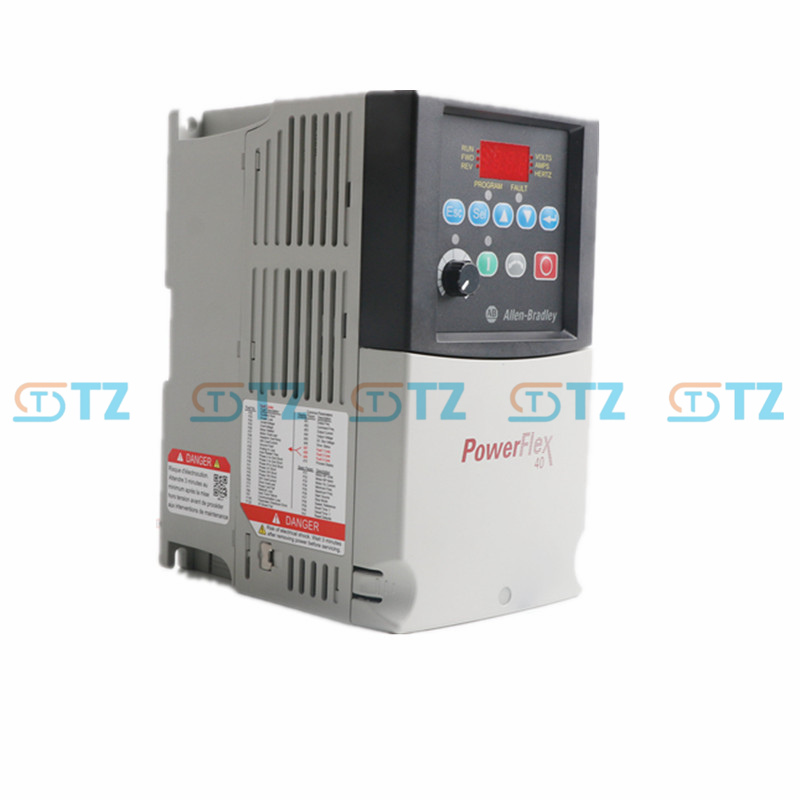
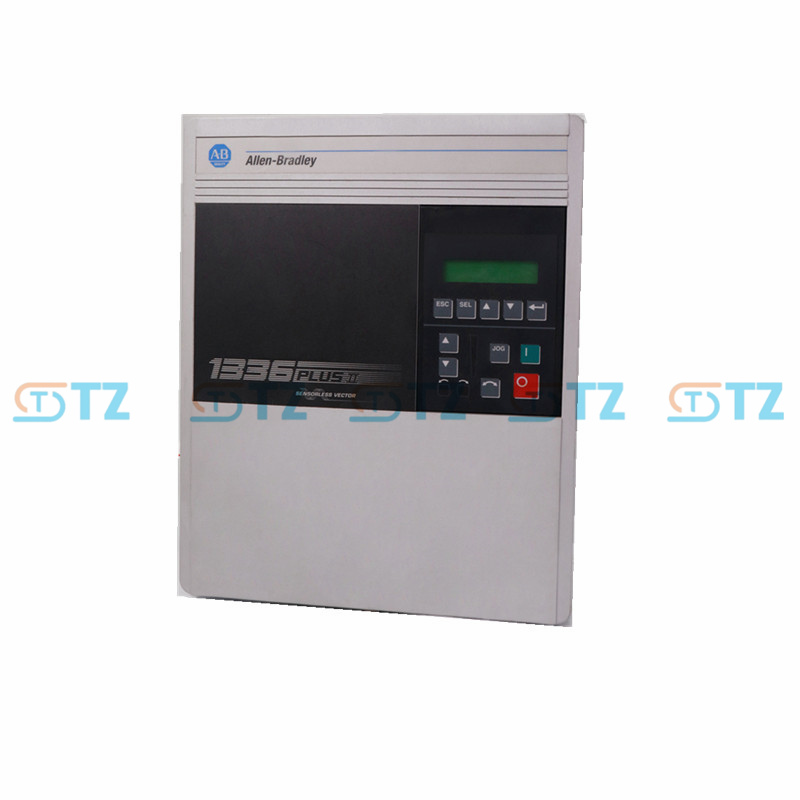
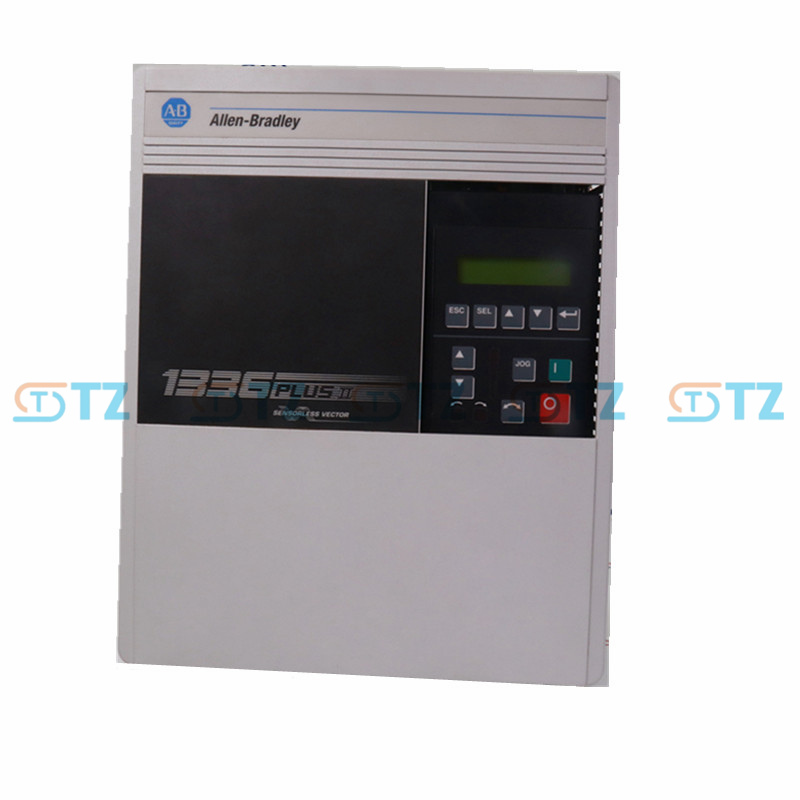
On Wednesday, Rockwell Automation stops selling new PowerFlex 70 drives. Not all of them, but the ones most plants actually have bolted into a cabinet. If you have a line running on a PowerFlex 70 and you have not yet decided what happens when the next one fails, that decision has now been forced on you. It is two days out.
I have watched three of these transitions in fifteen years. The pattern does not change. The vendor announces, everyone nods, nobody budgets, and eighteen months later a maintenance tech is on a phone at 2 a.m. trying to find a rebuilt unit from a broker who will not answer the provenance question. That is the bill I am trying to keep you from paying.
This is not a technical piece. You know what a drive does. This is about what the calendar costs, which parts you can still buy and when, and what you should put on a shelf before the dates arrive.
What exactly ends on September 30, and what does not
Read the announcement carefully, because the headline oversells it and the detail is where your budget lives. Rockwell's own PowerFlex 70 product page states: "Rockwell Automation announces the PowerFlex 70 AC Drive will be discontinued and no longer available for sale as of September 30, 2026. End of life status and discontinuation date only apply to the IP20/NEMA UL Type 1, IP54/NEMA UL Type 12, and Flange versions. The NEMA 4X versions remain in Active Mature status. To support your transition, we recommend modernizing to the PowerFlex 750 family of AC drives."
That is the vendor's language, not mine. Two things matter in it.
First, the NEMA 4X versions stay in Active Mature. If your washdown or outdoor installations run 4X enclosures, you keep a sales channel for now. Active Mature is not the same as Active, and it is not a promise of forever, but it is not a stop date either. Do not lump your 4X units in with the rest of the fleet when you build the audit. You will overspend on parts you can still order normally.
Second, the stop applies to specific enclosure families, and Rockwell points users to its Product Lifecycle Status search tool to check individual catalog numbers. That is not a formality. A plant with forty PowerFlex 70 nameplates on a spreadsheet thinks it has forty problems. In practice the mix of frames, enclosures and option cards means you have maybe six or eight distinct catalog numbers that actually matter, and some of them are in a different lifecycle status than the rest. Pull the numbers. Read them one at a time. Do not trust the family name.
The other half of this news cycle is Mitsubishi Electric, and there the deadlines are longer but the details are sharper. Two Sales and Service bulletins, both issued April 2026 and revised in August 2026, both citing difficulty obtaining components, cover the HF-KN series AC servo motors (Bulletin No. 26-07AE) and the MR-JN series AC servo amplifiers (Bulletin No. 26-06AE).
The HF-KN has been on the market 17 years, since 2009. That is a long run for a servo motor, and it means the installed base across packaging, food processing and light assembly lines is deep. The bulletin sets a made-to-order transition on March 31, 2027, order acceptance through March 31, 2028, last shipment and production end on March 31, 2029, and repair acceptance and parts supply through March 31, 2036.
A third bulletin, No. 26-09AE, covers the MR-EM340GF Simple Motion board and the SW1DND-EMSDK-B MELSOFT EM Software Development Kit. Same dates. More on that one shortly, because the replacement part is the awkward one.
The calendar, in the order it will hit you
Here is the sequence. No table, just the dates in the order they land, because that is how you build a purchase order schedule.
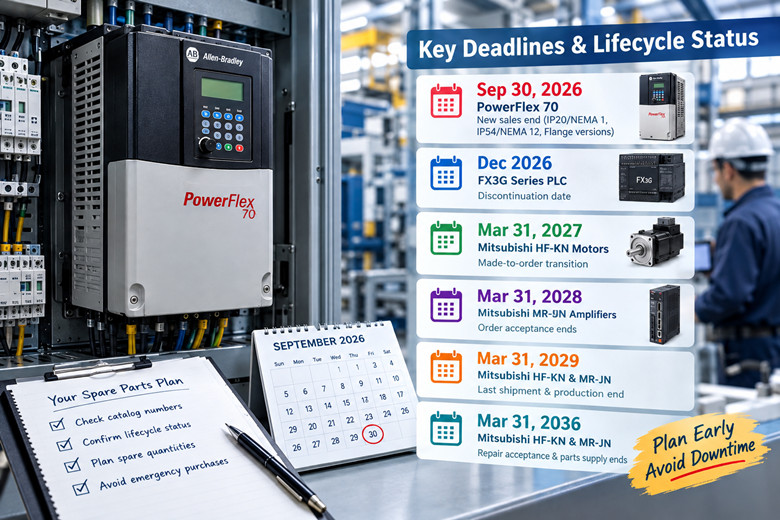
· September 30, 2026: new PowerFlex 70 sales end for IP20/NEMA UL Type 1, IP54/NEMA UL Type 12, and Flange versions. Two days from now. If you need a new unit in one of those enclosures, this is the last full business week and it is already ending.
· December 2026: the FX3G series PLC reaches its discontinuation date, following a June 2025 Mitsubishi announcement that set a last order date of June 2026 with the FX5UJ as the recommended successor. If you missed that order date, you are already in the secondary market for FX3G hardware. Note this one, because it is the case study for the whole article: the notice came eighteen months ahead, the last order date passed quietly in June, and the discontinuation date arrives in December with nobody's attention on it.
· March 31, 2027: HF-KN servo motors, MR-JN servo amplifiers and the MR-EM340GF motion board and its SDK all move to made-to-order. This is the first real pinch point. Made-to-order means lead times stretch and the vendor is building to demand, not to stock. If you have a project commissioning late 2027, that date is on your critical path whether your project manager knows it or not.
· April 2027: CE and UKCA marking removal takes effect on orders received on or after that date, for the same three Mitsubishi product groups. This is a different kind of deadline, and I will give it its own section below.
· March 31, 2028: order acceptance closes on HF-KN, MR-JN and the MR-EM340GF. After this date you cannot place an order at all. This is the hard buy date. Everything before it is planning. After it, you are buying from someone else's shelf.
· March 31, 2029: last shipment, and production ends, for HF-KN, MR-JN and the MR-EM340GF. Whatever was ordered by March 2028 ships by this date and then the factory stops.
· March 31, 2036: repair acceptance and parts supply end for the same Mitsubishi product groups. Seven years of repair window after production ends. That is generous compared to what most drive lines get, and it is the single most important line in this article for anyone panicking about a 2029 date.
Read that list once more and notice what is missing. Rockwell has published a sales end for the PowerFlex 70. Rockwell has not, on the material I can find, published an end of repair, end of support or spare parts cut-off for the same drive. I am not going to invent one for them, and you should be suspicious of any supplier who tells you a Rockwell repair window that the vendor has not stated. The absence of a date is not a runway. It is an absence of a date. Plan accordingly.
Why April 2027 is not like the other dates
Every other date on that calendar is about volume: can I order it, will it ship, can it be repaired. April 2027 is about paperwork, and paperwork is the deadline that catches European and UK plants off guard.
Both the HF-KN and MR-JN bulletins state, in Mitsubishi Electric's own words: "The CE marking will be removed from the [series] because it does not comply with the EU Cyber Resilience Act (CRA). In conjunction with the removal of the CE marking, the UKCA marking will also be removed. The orders received by Mitsubishi Electric on or after April 2027 will be supplied without the CE marking and UKCA marking."
I am reporting that as the vendor's statement. I am not going to argue the legal reading of it, because that is for your compliance people, not for a spares buyer at 6 a.m. on a Monday. What I will tell you is the practical consequence, and it is a procurement consequence, not a technical one.
If your plant is in the EU or the UK and your machinery documentation references CE or UKCA marked components, an order placed in April 2027 arrives with a rating plate that looks different from the one in your existing drawings. That is a conversation with your quality manager, your notified body if you have one, and whatever customer audit sits over your head. It is not a conversation you want to have for the first time the week you need the part.
The hazard gets worse, and the bulletins say so plainly: both the former and the new versions may be in distribution at the same time depending on stock status. That means a distributor with old marked stock and a distributor with new unmarked stock can both quote you the same catalog number on the same day, and the marking on the plate may differ. If you need a specific marking, you have to specify it on the purchase order and you have to confirm it at goods-in. Assume nothing from a part number alone.
For a plant in the Middle East or the Americas, this matters less directly, though it matters if you export machinery into Europe or if your OEM builds to European documentation. And it matters for resale value on anything you later sell into the EU. Know which of your three audiences applies before you decide how much of the April 2027 date is your problem.
The MR-EM340GF has one more wrinkle. Mitsubishi states that the recommended replacements, the motion control software SWM-G or the motion control board MR-EM441G, are not compatible with the MR-EM340GF and differ in specification. That is the vendor's language, and it is about as clear as a vendor gets. There is no drop-in. The replacement SDK is SW1DND-EMMSDK-B, and the bulletin references Mitsubishi document No. 26-21E, titled "Change in Packaging Labels and Rating Plates due to Enforcement of EU Cyber Resilience Act." If you run an MR-EM340GF, the part is not a stock buy. It is a migration project with its own engineering hours, and it belongs in the capital plan, not the consumables budget.
What this costs, and what it does not
Let me separate the fear from the bill, because the two are not the same number.
The fear is that September 30 means your PowerFlex 70 fleet is orphaned and every failure is a line-down event. That is not what the announcement says. Sales end is not support end. Rockwell stops selling new units in three enclosure families. It has not announced a repair cut-off. Your existing drives keep running, and the installed base is large enough that the third-party repair and remanufacturing market will serve it for years. For legacy drive spares, the practical question is not whether parts exist. It is who has them and what condition they are in.
The fear on the Mitsubishi side is the same, and the bill is smaller than you think. The repair window runs to March 31, 2036. That is seven years past production end. Most plants will have migrated off HF-KN and MR-JN long before that, because the replacement lines exist and are documented: HF-KN053(B) to HK-KT053W(B), HF-KN13(B) to HK-KT13W(B), HF-KN23(B) to HK-KT23W(B), HF-KN43(B) to HK-KT43W(B), HF-KN73(B) to HK-KT7M3W(B) on the motor side, and MR-JN-10A to MR-J5-10A, MR-JN-10A1 to MR-J5-10A, MR-JN-20A to MR-J5-20A, MR-JN-20A1 to MR-J5-20A, MR-JN-40A to MR-J5-40A on the amplifier side. If your architecture runs an MR-JN-10A1 or MR-JN-20A1 on a 1-phase 100 V AC input, note that Mitsubishi requires the MR-CM08K1 simple converter in combination. That is a line item people miss when they quote the swap.
The Mitsubishi bulletins do add one honest caveat worth reading twice: repairs may not be possible once component inventory is exhausted. So the repair window is a maximum, not a guarantee. Anyone telling you 2036 is a certainty has not read past the date line.
That leaves the real variable, and it is not the vendor. It is the secondary market.
Once orders close, every part you buy comes off someone's shelf. Condition and provenance become the deciding factors, and those do not appear on a data sheet. A remanufactured MR-JN that has been tested on a load bank with a documented repair record is a different asset than a unit pulled from a decommissioned panel and wiped down. Both can be quoted at the same price. Only one belongs on a critical line. The way you control that is by knowing your supplier's testing procedure before the emergency, by keeping serial numbers on your own units so you can trace what came back from repair, and by deciding in advance which of your lines can tolerate a used unit and which cannot.
For a plant, servo drive parts and drive spares bought from the secondary market are a legitimate, budget-saving route, provided the supplier tests, documents and warrants. The moment a supplier cannot describe their incoming inspection, the price stops being the point.
The decisions this forces this quarter
You have a short list and a long list. Do the short list in the next ninety days, before the March 2027 date starts pulling lead times.
1. Run a spares shelf audit against actual installed units. Walk the floor, pull every nameplate, and record catalog number, serial number, enclosure type and date of installation. This is the step everyone skips and it is the step that saves the most money. You will find drives on the shelf that belong to lines you decommissioned in 2019, and you will find lines running hardware that nobody has a spare for.
2. Build a clean catalog number list, one line per distinct number, with quantity installed and quantity on the shelf. On the PowerFlex 70 side, sort the list by enclosure family and check each number against Rockwell's Product Lifecycle Status tool rather than assuming the family status applies. On the Mitsubishi side, separate the three groups: HF-KN, MR-JN, MR-EM340GF.
3. Set a stock buy date tied to the real deadline, not the scary one. For Rockwell that date is now, for the IP20, IP54 and Flange units you still run. For Mitsubishi the hard date is March 31, 2028 for order acceptance, and the made-to-order transition on March 31, 2027 is the date by which lead times start hurting you. Anything you intend to buy new, buy before March 2027 or accept the lead time.
4. Start the migration case for the capital plan, not for the emergency. A migration case is a one-page document: how many units, what the replacement part number is, what changes in the panel, what the engineering hours look like, and what the plant loses if it does not do it. For MR-EM340GF that document is mandatory because the replacement is explicitly not compatible. For PowerFlex 70, Rockwell recommends the PowerFlex 750 family, so the case is a modernization, and modernizations go in next year's budget, not this month's emergency account.
5. Brief your quality or compliance contact on the April 2027 marking change, before it becomes a goods-in problem. It is a fifteen-minute conversation today and a stranded shipment later.
That list is small on purpose. You are not going to migrate forty drives this quarter, and you should not try. You are going to know what you have, buy the parts that go away first, and put the rest on a documented track.
Where a spare parts supplier fits
I am not going to pretend a parts supplier solves a lifecycle problem. We do not. What a good supplier does is narrower and more useful: it holds stock on the numbers you are about to lose, it can tell you which units it has tested and how, and it does not disappear during the week you actually need the part.
What you should ask any supplier quoting you on discontinued hardware, and ask before you need them:
Do they test, and on what? A load test on a drive and a run test on a servo are minimums. Ask for the procedure.
Can they trace provenance on a used or remanufactured unit? If they cannot describe where a part came from, treat the unit as unknown condition.
Do they hold buffer stock on the numbers you care about, or do they source to order? Sourcing to order means your lead time equals their lead time, which is exactly the problem you were trying to solve.
Will they confirm the marking on the rating plate for Mitsubishi parts after April 2027? If you need CE or UKCA, this is the question that separates a supplier who understands the change from one who has not read the bulletin.
The honest answer for most plants is a mixed model. Critical lines get new or vendor-repaired units. Non-critical lines and low-frequency spares come from tested secondary stock. Automation spares sourced that way, with documented testing, beat an unplanned line-down every time. Get that mix decided before the calendar decides it for you.
FAQ
Does September 30, 2026 mean my PowerFlex 70 drives stop working or stop being supported?
No. It means Rockwell stops selling new units in the IP20/NEMA UL Type 1, IP54/NEMA UL Type 12 and Flange families. Your installed drives keep running. Rockwell's published material documents the sales end and points users to its Product Lifecycle Status tool for individual catalog numbers. It does not publish a repair or support cut-off for this drive, and you should not accept a supplier's claim that it does.
My plant runs NEMA 4X PowerFlex 70 units. Am I affected?
Not by this date. Rockwell states the NEMA 4X versions remain in Active Mature status. Active Mature is not the same as Active, so keep it on your watch list, but you are not in the September 30 stop.
What is the actual last date I can buy HF-KN motors and MR-JN amplifiers?
Per the Mitsubishi bulletins, order acceptance runs through March 31, 2028, and last shipment and production end is March 31, 2029. The made-to-order transition happens earlier, on March 31, 2027, so treat March 2027 as the date lead times start working against you.
Is the April 2027 CE marking change a reason to stop using these parts?
That is a decision for your compliance function, not for the parts buyer. Mitsubishi Electric states that CE marking will be removed because the series does not comply with the EU Cyber Resilience Act, that UKCA marking will also be removed, and that orders received on or after April 2027 will be supplied without either marking. What it means for your machinery documentation depends on your market and your customer requirements.
Can I buy the replacement part and drop it in?
On the motor and amplifier side, the replacement lines are documented (HF-KN to HK-KT, MR-JN to MR-J5), and there are combination notes, including the MR-CM08K1 simple converter for certain 1-phase 100 V AC configurations. On the MR-EM340GF, Mitsubishi states plainly that the recommended replacements are not compatible and differ in specification. That one is an engineering project, not a part swap.
How long should I plan on the repair route?
Mitsubishi bulletins set repair acceptance and parts supply through March 31, 2036 for HF-KN, MR-JN and the MR-EM340GF, with the caution that repairs may not be possible once component inventory is exhausted. Plan the repair route as a bridge, not as a permanent strategy.
The FX3G situation is already past its last order date. What does that tell me?
It tells you the notices are accurate and the dates are real. Mitsubishi announced the FX3G discontinuation in June 2025, set a December 2026 discontinuation date and a June 2026 last order date, with the FX5UJ as successor. The last order date passed. If you were not watching, you are now buying FX3G hardware from stock. That is exactly the position you do not want to be in with HF-KN and MR-JN in 2028.
Should I buy a lifetime supply of spares now?
Rarely. Shelf stock costs money, ties up capital and can degrade. Buy what your failure history says you consume over the made-to-order window plus a buffer, not a lifetime. The exception is a part with no compatible replacement, like the MR-EM340GF, where the case for holding stock is stronger because the alternative is a redesign.
SEO fields - do not paste this block into the website
|
Meta Title |
PowerFlex 70 Sales End September 30: Legacy Deadlines |
|
Meta Description |
Rockwell PowerFlex 70 sales stop September 30, 2026, and Mitsubishi HF-KN and MR-JN run out in 2029. The deadlines, the CE marking change and what to stock now. |
|
URL Slug |
powerflex-70-sales-end-legacy-automation-deadlines-2026 |
|
Category |
news |
Publishing steps: 1) paste Meta Title + Meta Description into the Yoast SEO fields, 2) set the URL slug, 3) pick the category, 4) request indexing in Search Console. Site: tztechio.com

Please read on, stay posted, subscribe, and we welcome you to tell us what you think.


Sitemap | Blog | XML | Privacy Policy
In addition, with your permission, we want to place cookies to make your visit anointeraction with slOC more personal. For this we use analytical and advertisingcookies. With these cookies we and third parties can track and collect yourinternet behawior inside and outside super-instrument.com. With this we and third parties adapt super-instrument.com and advertisementsto your interest. By clicking Accept you agree to this. If you decline, we only usethe necessary cookies and you unfortunately will not receive any personalizedcontent. Please visit our Cookie policy for more information or to change yourconsent in the future.
Accept and continue Decline cookies