How Sensepoint XCL and XCD are Reshaping the Paradigm of Industrial Gas Detection
Dec 22, 2025
In today's deeply integrated industrial safety and automation landscape, gas detection is no longer an isolated "alarm device," but a core node in the smart factory's safety sensing network. The Sensepoint XCL and XCD series are precisely positioned based on different application environments and needs.
· Sensepoint XCL Series: Exceptional "Hazardous Area Guardian"
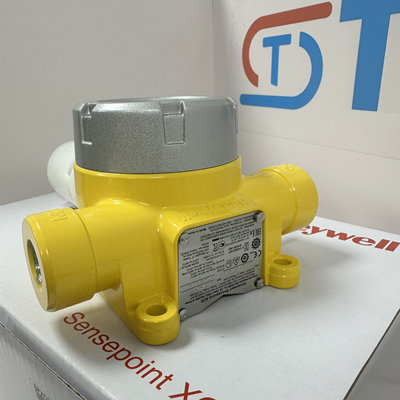
The XCL series is designed specifically for Zone 1 and Zone 2 hazardous areas, making it ideal for high-risk environments such as oil and gas, offshore platforms, and chemical plants. Its most prominent feature is its modular design—the sensor head is separate from the transmitter body. This revolutionary design means that when maintenance or calibration is required, there is no need for complex power-off operations in hazardous areas; simply replace the pre-calibrated sensor head module in a safe area, greatly reducing maintenance risks, time, and costs. It supports various sensors, including catalytic combustion, electrochemical, and infrared sensors, and can detect combustible gases, oxygen, and various toxic gases, and has passed stringent global certifications such as ATEX, IECEx, and SIL2.
• Sensepoint XCD Series: Flexible "Industrial-Grade Universal Guardians"
The XCD series is equally powerful, but primarily designed for Zone 2 or broader industrial environments, such as wastewater treatment, pharmaceuticals, food and beverage, and tunnels. It features an integrated, compact design, offering exceptional cost-effectiveness and installation flexibility. Despite the different design, the XCD series inherits Honeywell's stringent requirements for quality and stability, providing a variety of gas detection solutions and renowned for its strong anti-interference capabilities and long-life sensors.
In short, the XCL is a modular solution designed for the harshest hazardous environments, while the XCD is a reliable and economical choice covering a wide range of industrial applications. Together, they form a comprehensive gas safety defense line from the core explosion-proof area to the surrounding industrial areas.
In the wave of Industry 4.0 and smart manufacturing, safety is no longer synonymous with cost, but rather a core manifestation of production efficiency, sustainable operation, and corporate social responsibility. Honeywell Sensepoint XCL and XCD gas detectors, with their precise product positioning and deep automation integration capabilities, are evolving from traditional safety equipment into the "safety sensing neurons" of smart factories.
Sencepoint XCD Core Integration Technology Summary
Integration Elements | Capabilities Provided by Sensepoint XCD | Coupling Points with Automation Systems
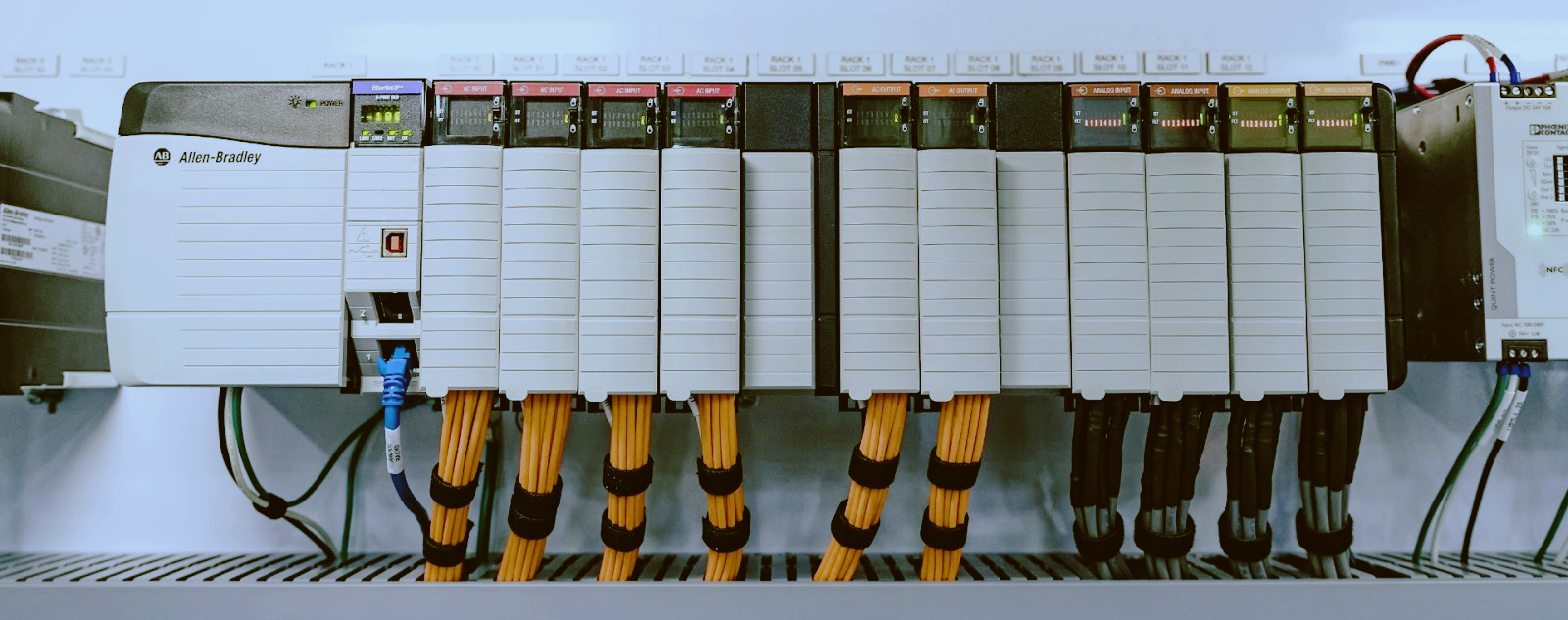
Signal Output | 4-20mA HART / Relay (Alarm) | AI and DI cards for DCS/PLC
Digital Communication | Modbus RTU (RS-485), some models support Ethernet | Serial or network modules for DCS/PLC/SCADA, GDS controller
Protocol | Clear Modbus register mapping (concentration, status, fault codes) | Easily supported by mainstream systems
Power Supply | Loop power supply or independent power supply | Adapts to standard industrial power supply architecture
Typical Application Scenarios
* Petrochemical Tank Farm: XCD monitors combustible gases, 4-20mA signal is connected to DCS, and Modbus is simultaneously connected to an independent GDS for 24-hour dedicated monitoring.
* Municipal Wastewater Treatment Plant: XCD monitors hydrogen sulfide and combustible gases, connected to a field PLC via Modbus RTU, PLC controls fan start/stop, and uploads data to the central control room SCADA screen.
• Semiconductor factories: XCDs monitor specialty gases, with signals integrated into the plant's BMS or dedicated monitoring system, triggering alarms and activating fume hoods.
In summary, the Sensepoint XCD is designed with full consideration for the versatility of industrial automation integration. It's not just "a detector," but a standard industrial IoT sensing node, flexibly embeddable into virtually all industrial automation architectures, from traditional DCS to modern IIoT, transforming critical safety data into actionable intelligence.
Honeywell's SENSEpoint XCD series gas detectors follow a clear naming convention, with model codes clearly indicating the detected gas type, sensor technology, output method, and whether a display is included.
Below are the classifications and examples of its standard models:
---
Standard Model Classification and Examples
1. Classification by Detected Gas and Sensor Technology
This is the most common classification method.
Detection Target Sensor Type Standard Model Example (Sensor Code) Description Combustible Gas Catalytic Combustion SPXCD-CAT Detects combustible gases such as methane and propane with a LEL of 0-100%. One of the most commonly used models.
Combustible Gases: Infrared SPXCD-IRC. Used in environments with background gases or in situations unsuitable for catalytic combustion (e.g., oxygen deficiency) to detect specific combustible gases.
Oxygen: Electrochemical SPXCD-O2. Detects insufficient oxygen (oxygen deficiency) or excessive oxygen (oxygen enrichment), commonly ranging from 0-25% VOL.
Toxic Gases: Electrochemical SPXCD-CO. Detects carbon monoxide.
SPXCD-H2S. Detects hydrogen sulfide.
SPXCD-SO2. Detects sulfur dioxide.
SPXCD-NO. Detects nitric oxide.
SPXCD-NH3. Detects ammonia.
SPXCD-H2. Detects hydrogen.
SPXCD-CL2. Detects chlorine.
Volatile Organic Compounds: PID Photoionization SPXCD-PID. Detects low concentrations of VOCs (such as benzene, xylene, etc.) for environmental monitoring or leak detection.
2. Classification by Output and Configuration
This code, appended to the sensor code, determines how it connects to the control system.
Output/Configuration Type Model Suffix Example Description
Basic Analog Output -TX Standard type, provides a 4-20mA analog signal representing gas concentration. The most basic integration method.
Analog Output with Relay -TXF Based on 4-20mA, it incorporates one or two programmable alarm relays (such as SPDT dry contacts), which can directly control audible and visual alarms or small devices.
With Local Display Code containing "D" The device has a built-in digital display screen, allowing on-site viewing of real-time concentration, alarm status, and device information. For example, a catalytic combustion model with a display might be SPXCD-CAT-DTX or a similar variant.
Digital Communication (Usually Standard or Optional) Most XCD models support Modbus RTU (RS-485) digital communication as a supplement or replacement for analog output. Protocol activation must be confirmed upon purchase.
HART Protocol - Some models support the 4-20mA HART protocol, enabling advanced diagnostics and configuration without interrupting analog signals.
Complete Model Examples
Combining the sensor code and output code forms the complete order model:
1. SPXCD-CAT-TXF
· Detection Object: Combustible gas (catalytic combustion principle)
· Output: 4-20mA + alarm relay
· Application: Combustible gas leak monitoring in chemical plants and pump rooms; the relay can directly start the fan.
2. SPXCD-H2S-DTX
· Detection Object: Hydrogen sulfide
· Configuration: With local display (D)
· Output: 4-20mA
· Application: H₂S safety monitoring in wastewater treatment plants and oil and gas drilling sites, facilitating on-site personnel reading the data.
3. SPXCD-O2-TX
· Detection Target: Oxygen
· Output: 4-20mA
· Application: Oxygen concentration monitoring before entry into confined spaces (storage tanks, tunnels, ship cabins).
4. SPXCD-CO-TXF (Hypothetical)
· Detection Target: Carbon monoxide
· Output: 4-20mA + Alarm Relay
· Application: Carbon monoxide monitoring in parking lots, boiler rooms, and metallurgical workshops.
Key Selection Steps Recommended
1. Determine the Target Gas: Identify the specific gas to be detected (e.g., methane, H₂S, CO, etc.).
2. Confirm the Range and Sensor: Select a catalytic combustion, electrochemical, or infrared sensor based on the gas type and expected concentration.
3. Select the Output Method:
· Simply connect the concentration signal to the DCS/PLC → Select 4-20mA output (-TX).
• For local independent audible and visual alarms or simple control → Select the model with relay output (-TXF).
• For on-site numerical readings → Be sure to select the model with display (D).
• For multi-point networking or transmitting more data → Confirm that Modbus RTU functionality is activated.
4. Consider environmental certifications: Confirm whether the product has the required ATEX, IECEx, UL, etc. certifications based on the installation area (explosion-proof area, non-explosion-proof area).
Important Note: The above models are general examples. Honeywell's official order numbers may be more complex and precise, including details such as power supply voltage, certification regions, and installation accessories.
TZ Tech industrial Automation Hardware supply, Modules, PCB Cards, Drives, Motors, Spare parts, etc.
Many Available just wait for you, feel free to ask to get better deal!!!
Bou L
Sales Specialist
Bou.l@tztechautomation.com+86-175 5077 6091